

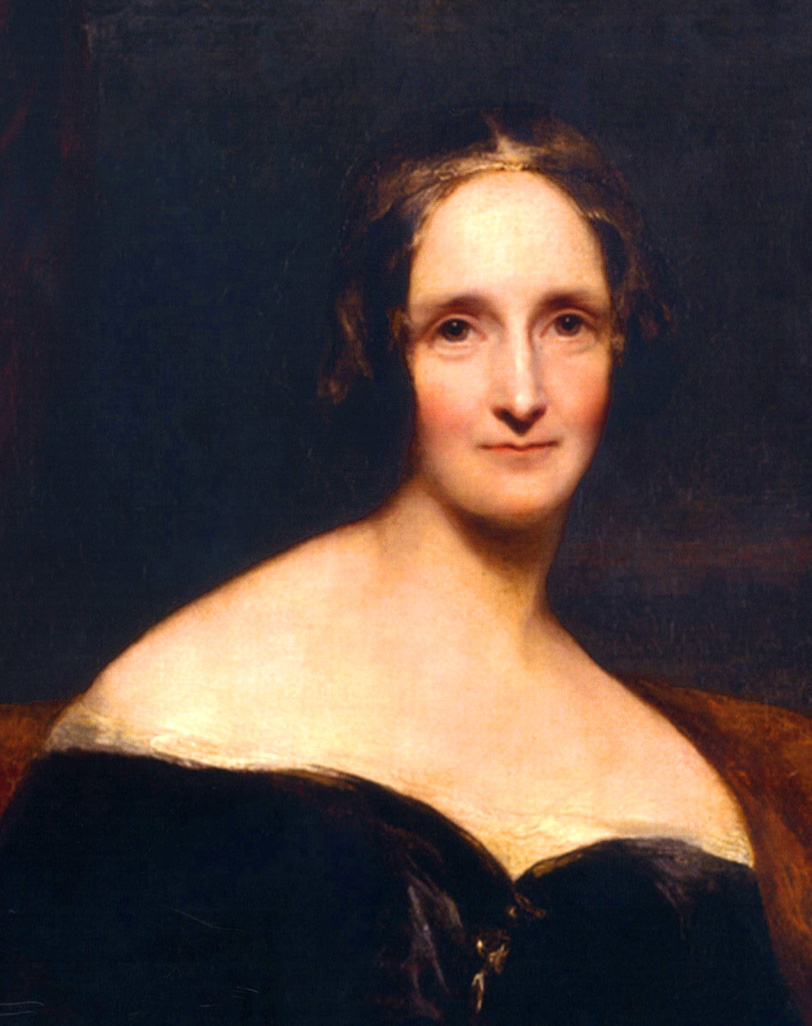
As one of the first examples of the Science Fiction genre, Mary Shelley’s 1818 novel Frankenstein is a gothic classic. Being the pop culture icon that Frankenstein (or more specifically, his creation) is, I knew that major details would be lost in translation or adaptation. However, despite knowing a basic synopsis of the novel, it still delighted and terrified me in ways that I hadn’t expected. I have more mixed opinions of the film, as it has many major, plot-relevant details changed, but still manages to execute and elevate the themes of the novel.
The original story follows Victor Frankenstein, a bright student with a deep-rooted curiosity. He, through his studies, unveils a method to create life. He is horrified by the monster that he creates, and flees. For some time, he imagines the beast as nothing more than a dream, but this idea is shattered when his younger brother is murdered, with the creature being the culprit.
Eventually, the monster visits Victor, and explains his tale of learning, suffering, and rejection. He then makes one wish of Frankenstein: the creation of another creature to be his companion. After initially accepting, Victor destroys his progress on the being, leaving the monster to torment him as a mortal enemy for the rest of his days.
I had known that many depictions of Frankenstein’s Monster are wildly inaccurate to the novel, but I was particularly surprised by his character. Instead of being a lumbering, mindless beast, the monster is learned, articulate, and refined.
One of my favorite sections of the novel is his tale that he tells to Frankenstein, wherein he explains the events following his construction. Several months after his creation, he takes residence in a hovel next to the home of a family. He grows fond of them, collecting wood for their fire, and learning their language through their books – entirely unknown to them. He desperately craves the warmth and happiness of others, and attempts to be welcomed to the family, but is chased off violently despite his kindness.
Being originally published in 1818, the text is written in a much different style to modern works, possibly making it a more difficult read for some. It is also quite slowly paced, especially in the beginning, but this works towards the novel’s favor as Shelley’s writing tends to linger in the details.
At certain points throughout, she describes vast scenes to the reader, creating an incredibly vivid mental image. The introduction and closing scenes stand out to me, taking place by an expedition vessel in the arctic where the monster is first spotted. Elsewhere, Shelley uses this pacing to keep the reader on edge through entire chapters. Frankenstein took me far longer to read than many other novels of similar length, but I enjoyed it nonetheless.
The creature, despite his later actions, is a genuinely sympathetic character. I had truly felt for him during the scene where he is rejected from the humans that he cared for so deeply.
Frankenstein closely parallels his creation, greatly desiring knowledge and companionship.
Despite their similarities, he has difficulty empathizing or understanding the creature in any way.
It is important to note that the characters of Frankenstein are very morally ambiguous. Victor’s fury with the creature is expected, as it is the cause of his suffering. Over the course of his life, he killed Victor’s brother, wife, and best friend, as well as tormenting Victor until his death. Although these actions may not be justifiable, they are understandable given the monster’s upbringing. Victor, on the other hand, had taken mangled body parts and reanimated them into a being that could feel pain. The creature had suffered immensely under the prejudice of others, and to a degree, this was the fault of the creator who had abandoned him.
Overall, I was very satisfied with Frankenstein, being all I expected and far more. The gripping tale was fairly unique to anything that I have read, and the themes of scientific ethics and obsession have quickly elevated the novel into one of my favorites.
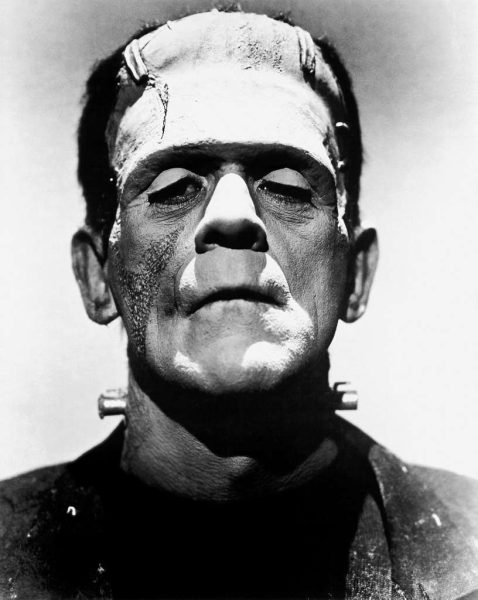
There have been many adaptations of the original story in the 200 years since its original release, and while few of them have been especially faithful, Guillermo del Toro’s adaptation seemed unique, mostly due to its recency and its director. Del Toro is known for his unique gothic style and passion for his craft, so I was hopeful that he would do the source material justice.
When beginning the film, a few major differences stuck out to me. The film starts similarly to the novel, on an expedition to the Arctic. It chooses not to adapt the quiet terror that the original’s introduction induces, going with a much more assertive scene.
The crew hears an explosion, and come to find Frankenstein near the site of the blast. He is brought back to the ship, when the monster is seen for the first time. He demands the return of Victor, and kills several of the crew in a unique action sequence before making his way to the craft. He is thwarted after falling under the ice, before Frankenstein begins to tell the captain his tale.
Immediately, I had issues with the story. I went into the film hoping for a fairly accurate adaptation with smaller edits made, but major story beats were overhauled from the beginning. Frankenstein begins his tale by describing his father – not as the benevolent and worrisome man that the novel had described, but as a cold, cruel, and arrogant patriarch. He beats Victor, and is hinted at being complicit in his wife’s death during childbirth. Before her death she gives birth to William, the beloved child of the Frankenstein family. Victor’s father goes on to adore his second son, far more than he did Victor.
This is another plot point that irked me, as in the novel, young William is killed by the monster as a form of revenge against his creator. In the film, William is much closer to Victor’s age, and while playing a very important role, his character is entirely different. Victor himself is also much different from his original disposition. Firstly, he is far more public with his experiments. The original novel had Victor fairly secretive and ashamed of his work, while in the film, he displays progress of his creature to a crowd in a judiciary hearing, showing the reanimated corpse to the masses as well as displaying the creature to his companions. Likely due to his father’s change in character, he is far more arrogant and prideful as well. He pursues the affection of William’s fiancé Elizabeth (originally playing the role of Victor’s own fiancé and cousin) incessantly, despite her rejection.
After he created the monster, the aspect that I was the most surprised about was revealed: Victor, at first, is proud of his creation. It startles him initially, but he shows the being the warmth of the son and the embrace of a father, eventually calling him his own son. Elizabeth forms a sympathetic bond with the creature, and has growing concerns over the ethicality of its existence.
Once the initial joy of creation passes, however, Victor begins to take on the attitude of his own father. He is harsh with the creature, and seemingly jealous of the compassion it receives from Elizabeth. He eventually attempts to destroy the monster, injuring himself in the process.
At this point, the film does something that I appreciated. At several intervals throughout the movie, it jarringly switches back and forth between the retelling of this tale and the chaos of the present. During this flash to reality, the monster boards the ship, and aggressively makes his way to the captain’s quarters. He hears that Victor told his own side of the story, so the creature decides to tell his part as well.
From here, much of the story is similar to the original, with the creature’s attempt and failure to connect with humanity. After he learns of his origins, the story takes one of the most dramatic deviations from the original. To my surprise, I thoroughly enjoyed it. Compared to the novel, Victor has a much more direct role in his own downfall, and his irrational anger leads to the demise of those closest to him.
After watching, I had slightly mixed feelings but I had largely appreciated the film. As in the original, the creature stood as an incredibly compelling character, and the expansive cinematography had emphasized his isolation from humanity. I especially liked a scene that takes place just before the prelude, where the monster taunts Victor with an understanding of his strength. The observable evolution of the monster is another element that I liked, transforming from an innocent, curious creature, to an intimidating and fluent beast – all while remaining visually consistent.
At points throughout, I did have issues with some of the visual effects. At times, the animals or background elements would be noticeably out of place with the actors, affecting immersion. However, if one is to watch the movie, viewer discretion is advised. I typically don’t have any issue with bloody scenes, but the violence and practical effects are uncomfortably realistic, blurring the lines between what was real and fake.
While touching on the themes of the novel, the film shifts focus to Victor’s overwhelming jealousy, and the effects that his father had on his personality. I personally prefer the original work by far, but the film is still successfully able to take the content of the original story, fit it into the length of a movie, and twist it into something unique while staying true to the themes of Frankenstein.