



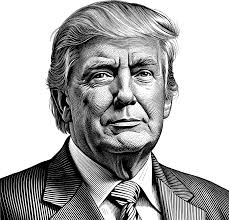
President Donald Trump gave the longest State of the Union address in recent history on February 24th, 2026, outlining the administration’s plans for the future and stances on key policies.
Trump’s address lasted about 1 hour and 48 minutes, which makes it the longest State of the Union address since at least 1964.
With the economy being such a major factor for voters in the upcoming midterm elections, Trump spent a lot of time during his address insisting that the economy is booming. Trump claimed the economy has been improving since he was elected. He specifically mentioned the stock market, lower inflation rates, cheaper gas prices, job growth, and lower mortgage rates to support his claim.
Trump advocated for his Stop Insider Trading Act, which would impose additional restrictions on stocks for members of Congress and their families. The bill is intended to prevent fraud by government officials who use insider knowledge to profit in the stock market.
Several Supreme Court Justices were present for the address, and Trump expressed his disappointment with the recent Supreme Court ruling against some of his tariffs. Trump maintained his support for tariffs, noting that tariff revenues were important to the federal government.
West Morris Central senior Daniel Guidea gave his concerns regarding tariffs. “It doesn’t really make sense to me,” Guidea said. “We’re cutting off a lot of people that we’ve been great allies with for many years, and it just doesn’t seem logical to me.”
Although Trump did not spend a significant amount of time on foreign policy, he touted the success of the military operation in Venezuela that resulted in the capture of Venezuelan president Maduro.
West Morris Central senior Antonio Montella voiced his opinion on US involvement in foreign affairs. “Focusing on…the United States itself and already established problems are more important than regime changes,” Montella said.
Trump also briefly talked about Iran, stressing the importance of preventing Iran from obtaining nuclear weapons. At the time of the address, the United States had been amassing a large military presence near Iran but had not yet engaged in fighting. A few days after the address, the United States and Israel launched strikes against Iran which started the ongoing conflict.

