


Interventionism in South America
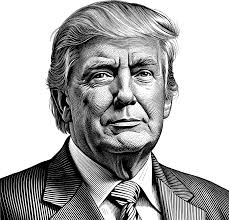
On January 3rd at 2:00 a.m. local time, the Venezuelan leader Nicholas Maduro, along with his wife, Cilia Flores, was captured by U.S. forces and taken back to prison in the U.S. In doing so, President Trump broke international law to follow through with this plan. This marks another chapter in the U.S. intervention in foreign affairs and specifically South America. During this time, it is something of utmost importance to be aware of previous affairs in South America and globally.
According to the National Archives, The Monroe Doctrine enacted in December of 1823 was the first indicator of potential U.S. involvement in South America, claiming that the entire western hemisphere was under the jurisdiction of U.S. Protection and any interference of European Powers would be a threat President Roosevelt would use the Monroe Doctrine in response to foreign debt collection to establish the Roosevelt Corollary to claim that the U.S. also had a right to preserve peace and protect life in South America.
Shortly after, under the leadership of President Dwight D Eisenhower, The C.I.A backed a coup and replaced the democratically elected Guatemalan President Jacobo Arbenz. Arbenz had passed reforms that threatened American business interests by nationalizing property owned by the United Fruit Company, which is now Chiquita Brands International. Following this coup, Carlos Castillo Armas, leader of the coup, came to power and was the first of U.S. backed leaders, before civilian rule returned in the 80s.
Following this came the infamous failed Bay of Pigs operation to overthrow Fidel Castro. This would mark an important note of impeding upon South American independence to prevent the spread of communism. This would inevitably lead to the Cuban Missile Crisis in 1962.
After the U.S. backed Nicaraguan Leader, Anastasio Somoza, was overthrown in 1979 by the Popular Sandinista National Liberation Front. Prominent leader and Marxist, Daniel Ortega, came into power. Once coming into power, the Sandinista government implemented policies which redistributed wealth and land. According to American Archive, These policies were wildly unpopular amongst the upper middle class and the wealthy. People who spoke out against the government were brutal to people who spoke out against the government. Out of this, the Contras would grow, formed of political dissidents, counterrevolutionaries and Somoza sympathizers.
After being elected president in 1981, Ronald Reagan would face a struggle to support the Contras. According to the Irregular Warfare Center and the American Archive, Congress would repeatedly deem it as an attempt to unjustifiably intervene against a legitimate government. Eventually, the Boland Amendment would be passed, restricting any intervention within Nicaraguan conflicts. This did not stop Reagan, as his administration and the CIA were secretly assisting the Contras through weapons deals to Iran, which had an embargo on it at the time. This would come to be known as the Iran-Contra Affair.
The next intervention would be in Chile. According to the University of Hawaii, the election of Salvador Allende would foster fears of socialism growing in Latin America. The U.S. backed a military coup led by General Augusto Pinochet. In September of 1973, the coup struck and moved toward the palace. The government-aligned forces withheld until a Jet struck the palace with rockets. Salvador Allende would kill himself after the strike. Pinochet would soon come to power, marking a period of suffering and brutality under Pinochet.
This is not to say, however, that the U.S. has not had positive interventions. For instance, the establishment of the Panama canal, creating one of the world’s most important trade hubs. In addition to this, the U.S. involvement in WWII included providing aid in rebuilding Europe after WWII.
What does WMC think of the U.S. seizure of Nicholas Maduro?
Many reasons as to why Trump made the decision to invade Venezuela have been circulating, not limited to but including, for natural resources, dethroning a dictator, and dismantling drug rings that are funneling into America. Junior Scarlet Weinstein said, “Obviously, there’s the drug cartel angle, which is plausible. But I think the oil and natural resources are the most likely reasons. Trump has said he wants to control drugs in America, but I don’t really see that as the leading factor. I mostly believe it’s about America making a bigger economic profit.”
Senior Milo Pulido says, “Especially when looking at U.S. conflicts in the Middle East. During the War on Terror, a lot of what was framed as fighting terrorism after 9/11 was, in many cases, an excuse to gain access to oil. That’s a common theme I see repeated.”
Many see Trump doing this as a way to push the boundary and allow for him to get away with more illicit acts. “I think public reception plays a big role. This may lead people to become more complacent about the invasion of other countries. I think this could become a visible trend, where people increasingly accept violations of international law. The bar keeps getting pushed further and further, and I do think that will lead to more conflict,” said Pulido. Their highlight on how Trump’s actions are often seen by individuals to be conflicting with campaign promises.
Some people see Trump’s actions as similar to those of past presidents. Weinstein stated, ”Starting with things like the Gulf of America and then moving toward Venezuela, it’s obvious he’s working his way into South America. His supporters see these actions as positive, whether it’s just a rename or capturing a prominent but controversial figure. He starts with things most people see as “bad people” so that he can later push actions that might be more controversial.”
The interventionist saga of America is continuing and shows few signs of stopping with Trump’s discussion of the annexation of Greenland. Whether it is for military defense, for peace, or the spread of socialism, the U.S. has had a long and extensive list of interventions in global conflicts.

