


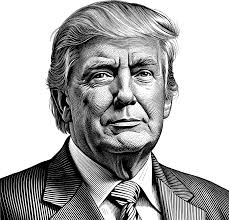

On September 23, 2025, Donald Trump delivered a speech to the United Nations General Assembly (UNGA). The speech took place over the course of an hour and covered just about every topic imaginable. In the past, many presidents took advantage of the opportunity to speak to the UNGA as a chance to bring attention to various international concerns. For President Trump, he used the opportunity to cast blame regarding a wide variety of issues, and to talk about two of America’s most pressing issues: escalators and teleprompters.
Donald Trump is known for his polarizing nature; people either love him or hate him. It is what got him elected. Dr. Crouse, a history teacher at West Morris Central High School, draws parallels between Trump’s politics and those of Richard Nixon. When asked for analysis, Dr. Crouse stated, “Trump’s politics are very similar to Nixonian politics. With Nixonian politics, there’s really two schools of thought when you’re trying to get people to vote for you: you’re either trying to get as many people interested as you can or create exclusivity. So his system of politics is much more combative.”
This confrontational approach may be effective in energizing supporters during elections by polarizing audiences. However, with no election at stake and speaking on an international stage, Trump’s combative rhetoric appears to serve little constructive purpose, prompting doubt about its effectiveness in advancing American interests globally.
Many supporters of Trump claim that his speech wasn’t combative, but rather, justifiably critical of the UN. Many people make the claim that the modern-day UN is simply a glorified regulatory body with no real power. Although every individual is entitled to their own opinions regarding the practicality and effectiveness of the UN, they were not the sole victims of Trump’s attacks. The President spent particular time hurling insults at countries with more lenient immigration policies. He stated, “I’m really good at this [immigration] stuff. Your countries are going to hell.”
Trump’s form of “diplomacy” is ineffective and brute. Senior Marc Carames followed the speech and feels as though it is on par with Trump’s record. “[Trump had] distanced the U.S from many of our closest allies, and you can see how with some of the language he used and the way he goes about issues, it’s very blunt and not reflective of a lot of the common opinions of the American people in the world at large”Carames stated.
Despite the occasional semi-intelligible spurt, Trump’s speech included his normal tangents. This time, on his issues with escalators and teleprompters. When entering the UNGA building, Trump was faced with the horrifying scene of an escalator that stopped working while he was attempting to use it. Moreover, at the beginning of his speech, the teleprompters malfunctioned. Both instances are most likely caused by unintentional human error. However, during his speech, Trump stated, “These are the two things I got from the United Nations: a bad escalator and a bad teleprompter.” He continued to claim that those responsible for this should be arrested.
Many Americans were angered by the President’s claims, as he had used an international forum to indulge a personal vendetta rather than to raise awareness of important issues. Carames followed the incident closely. “It’s honestly very petty, and I think disingenuous to the American people to spend time on these ‘issues’ rather than the actual problems that are facing the country” he stated.
Donald Trump serves as the face of America, reflecting the nation’s image as President. Because of this, it is crucial for Americans to consider how the rest of the world perceives the country, especially in light of the effectiveness and tone of presidential speeches at global forums like the UN. It is up to the American public to make their voices heard. By urging members of Congress to hold the President accountable for his words, the nation can work toward restoring America’s reputation as a productive, cooperative, and respected member of the international community. Change begins with demanding more from national leaders and expecting better from the man who is supposed to represent the United States on the global stage.