


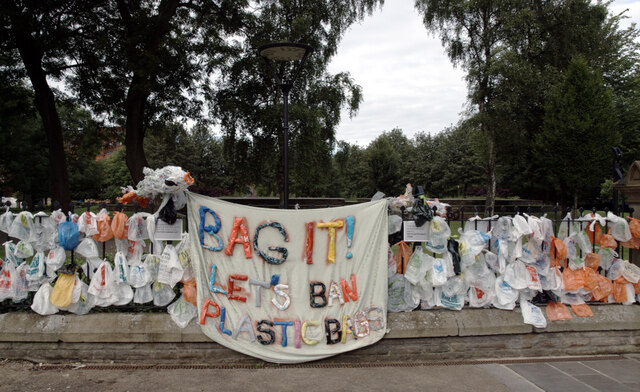
As of May 4, 2022, New Jersey has banned single-use plastics such as single-use plastic carryout bags and polystyrene foam food service products in stores to prevent unnecessary waste. It begs the question: how effective has this seemingly impractical ban been in those three years?
According to OceanConcervancy.org, as of June 19, 2025, there has been a tremendous decline of wasteful plastic inhabiting the ocean in areas that had implemented the ban. “The study shows that plastic bag policies lead to a 25% – 47% reduction of plastic bags in the environment where they are implemented. Ocean Conservancy has long advocated for such policy measures…”, Ocean Conservancy wrote.
The effectiveness of New Jersey’s single-use plastic bag ban has several factors leading to its overall success.The NJ ban is considered the strongest and most effective in the nation out of the nine US states participating along with multiple territories as well. In New Jersey alone over 24 billion plastic bags and 480 million paper bags have been removed from the waste stream since its enactment. Along with that, Linda Doherty and JoAnn Gemenden of Northjersey.com found that this new ban also had a tremendous outcome in terms of minimizing oil being used during manufacturing. “Eliminating those bags saved about 38,000 gallons of oil needed to produce them each year. These are incredible environmental benefits”, wrote Linda Doherty and JoAnn Gemenden.
Now here’s where it gets interesting. Assemblyman John Azzariti Jr., a republican lawmaker in New Jersey’s Bergen County, introduced possible legislation to repeal the state’s 2022 law banning the/use of single-use plastic and paper carryout bags, his office announced earlier this year stating that it was a “left-wing fanfare”, to ban plastic and was actually hurting the environment (he stated with little to no credible data).
“New Jersey implemented the most restrictive ban on single-use plastics, Styrofoam and paper carryout bags to much left-wing fanfare, but the unintended consequences of the law are starting to negate any environmental benefits,” Azzariti said in the statement very clearly trying to appease his republican demographic.
In this statement Azzariti referenced a study by the research company, “ Freedonia Group”, stating the law led to a 3x increase in the use of plastic consumption because “alternative” bags are made of polypropylene and contain non-recyclable plastic. It has been later revealed that this study was funded by the American Recyclable Plastic Bag Alliance (ARPBA). This alliance represents the U.S. plastic bag industry, advocating for sustainable practices yet still opposing bans on plastic bags. The ARPBA also claimed through “studies” that the American people are only using reusable bags between two and three times which is extremely false.
According to StillWater.org, a Maryland study showed reusable bags can go at least for weeks. “The life of a reusable bag is quite long. Pass it on to a friend if it is still usable”, found by StillWater.org. Along with that, in an interview with CNN World, Judith Enck, a former Environmental Protection Agency regional administrator and now president of Beyond Plastics (a non-profit), reveals that she has been using the same cotton bag for over two decades. “I think we shouldn’t let the LCA take our common sense away from us. Single-use plastic has enormous environmental damage”, stated in an interview with CNN World correspondent, Katie Hunt. Reusable bags are extremely effective and important to saving the environment so to attempt to disprove this fact is irrational.
All and all, the ban on plastic bags has had so many positive environmental outcomes, including, reduced litter, decreased greenhouse gas emissions, and helped the conservation of natural resources. Azzariti’s comments on the ban was propaganda specifically targeted to get the republican party to back him up rather than actually trying to better New Jersey’s ecosystem.